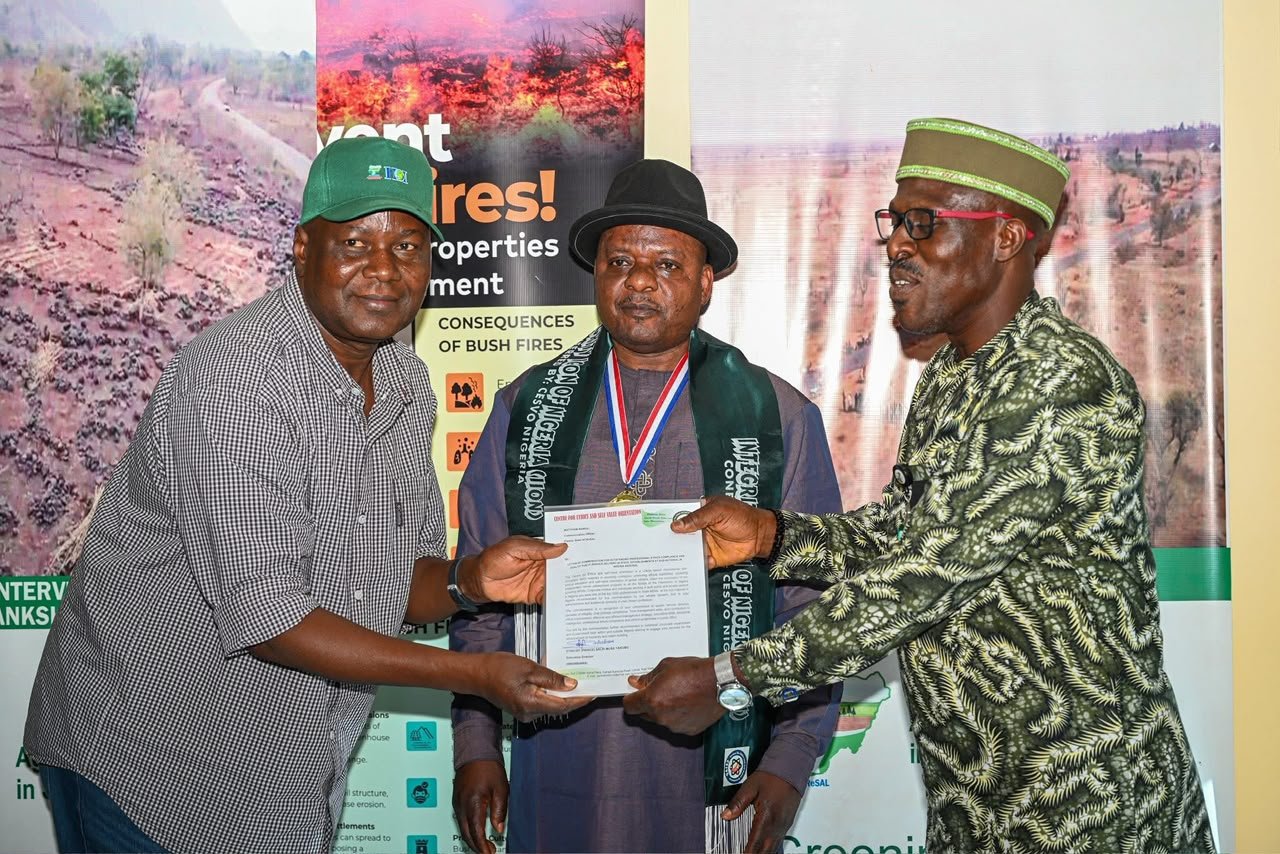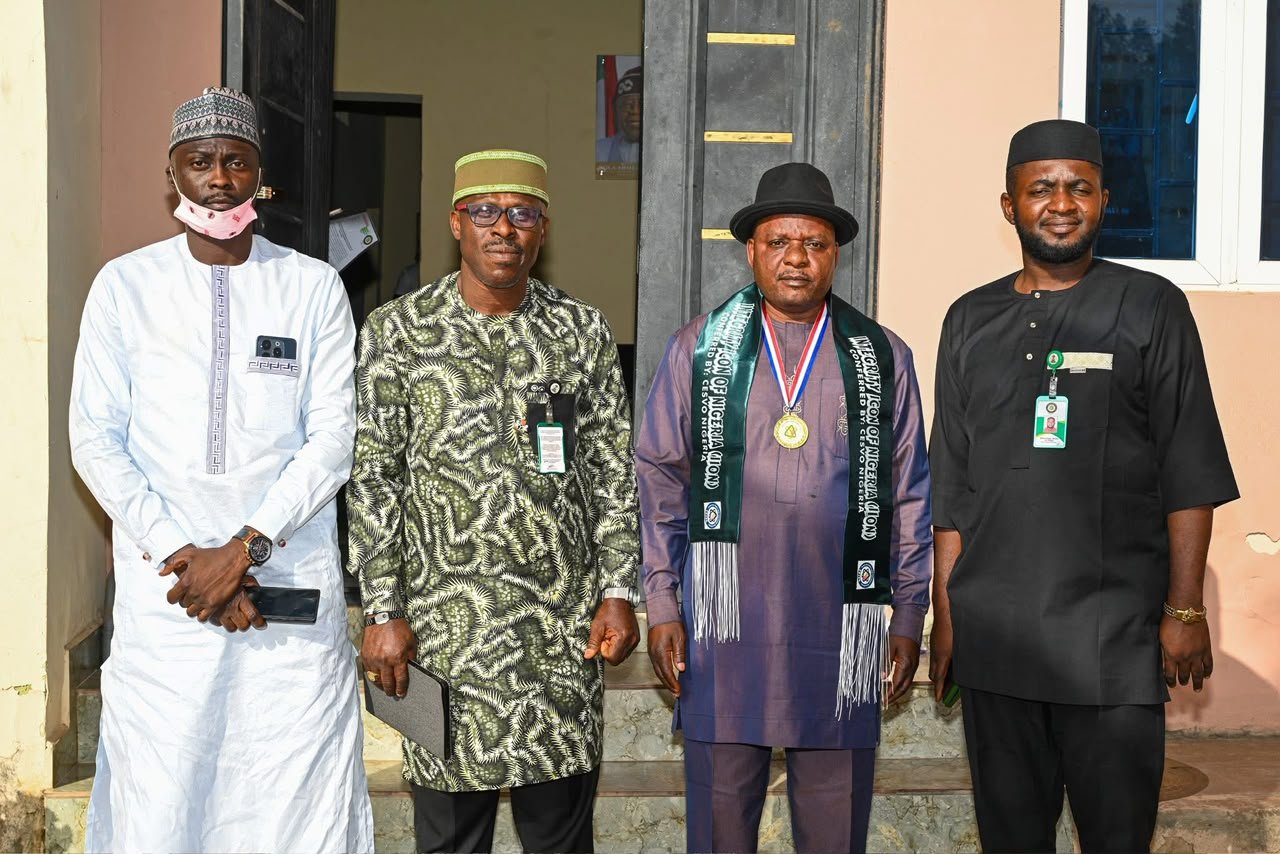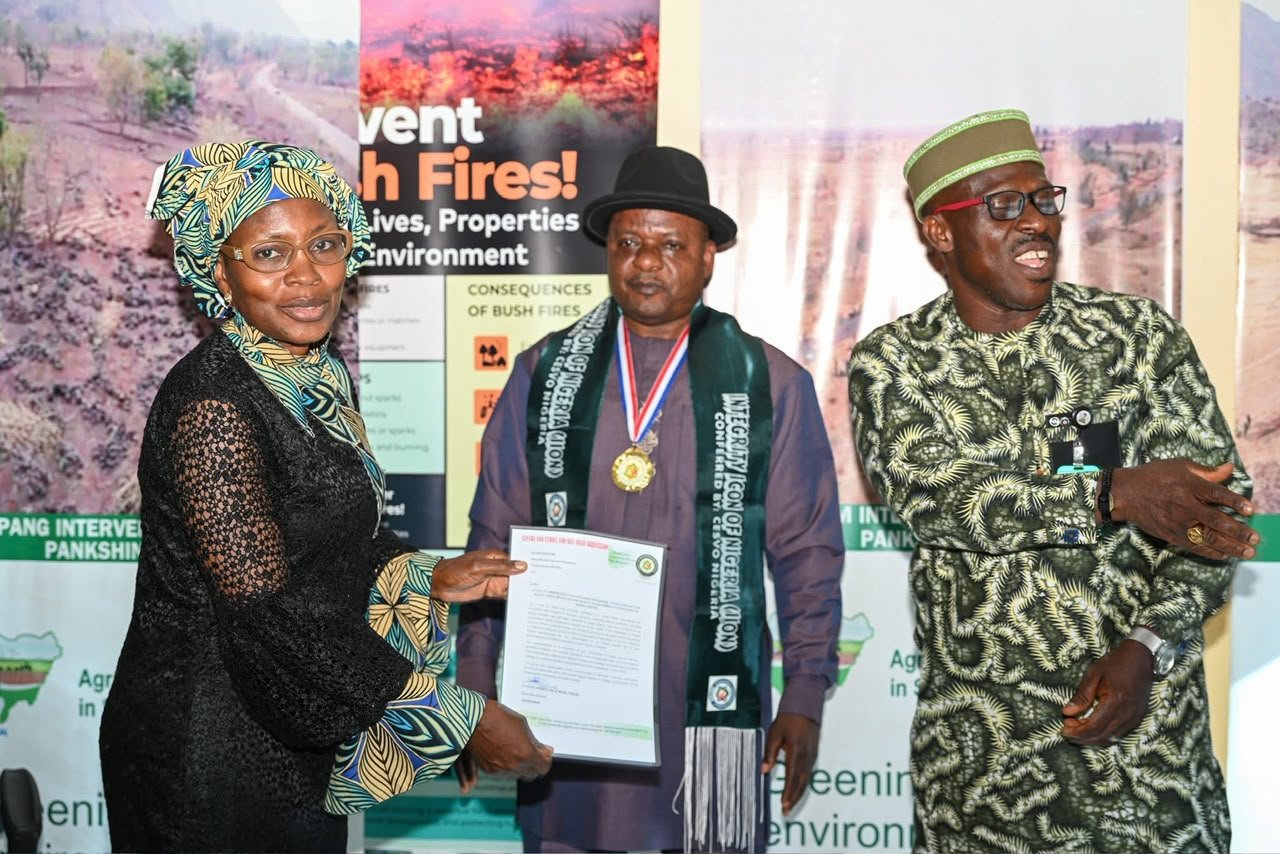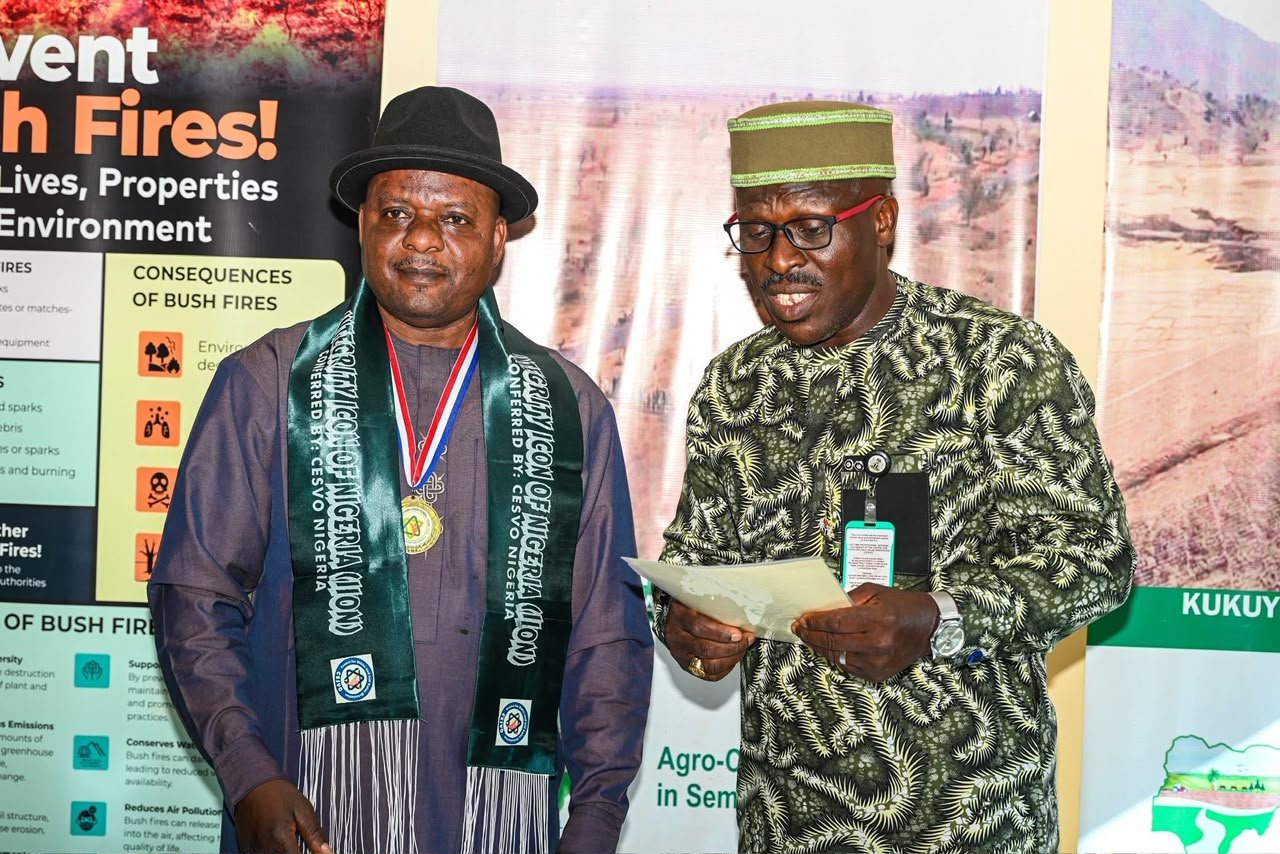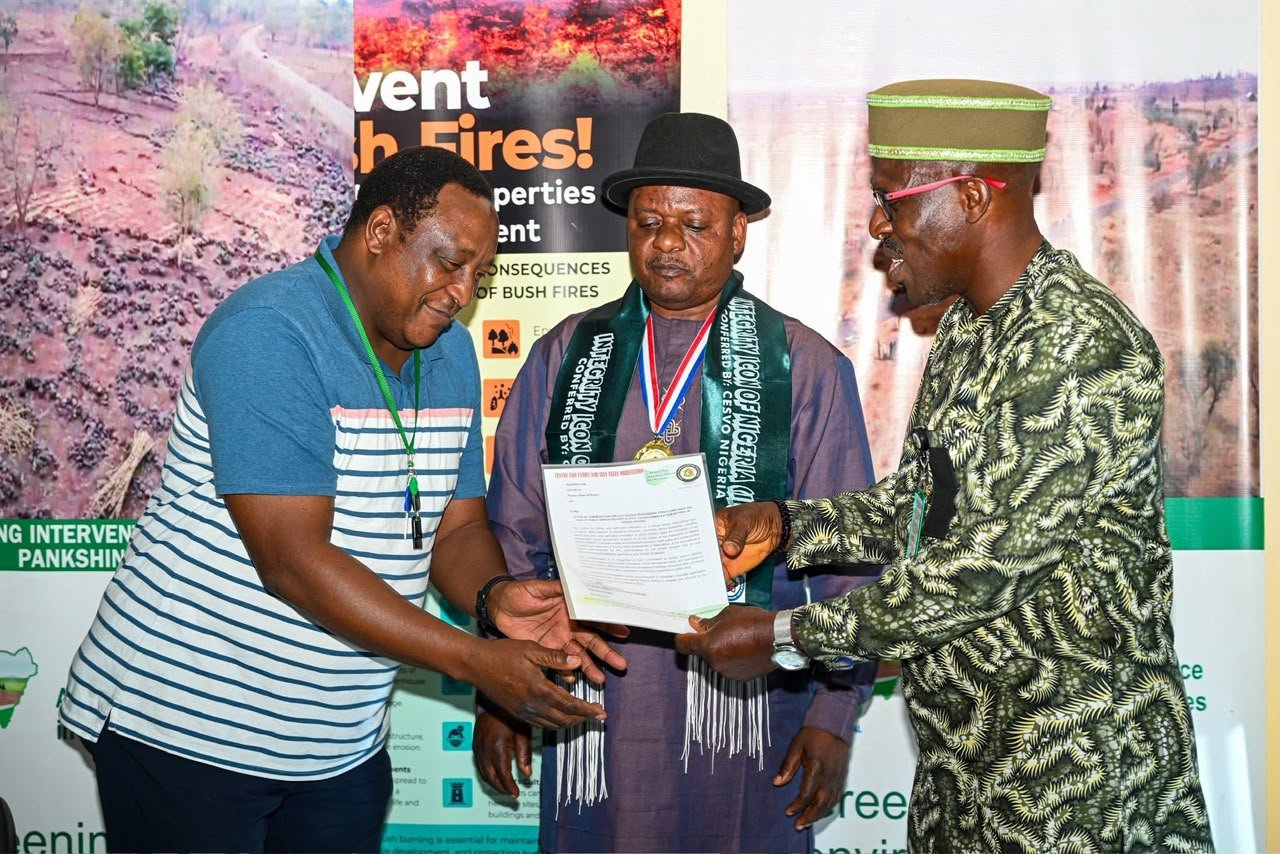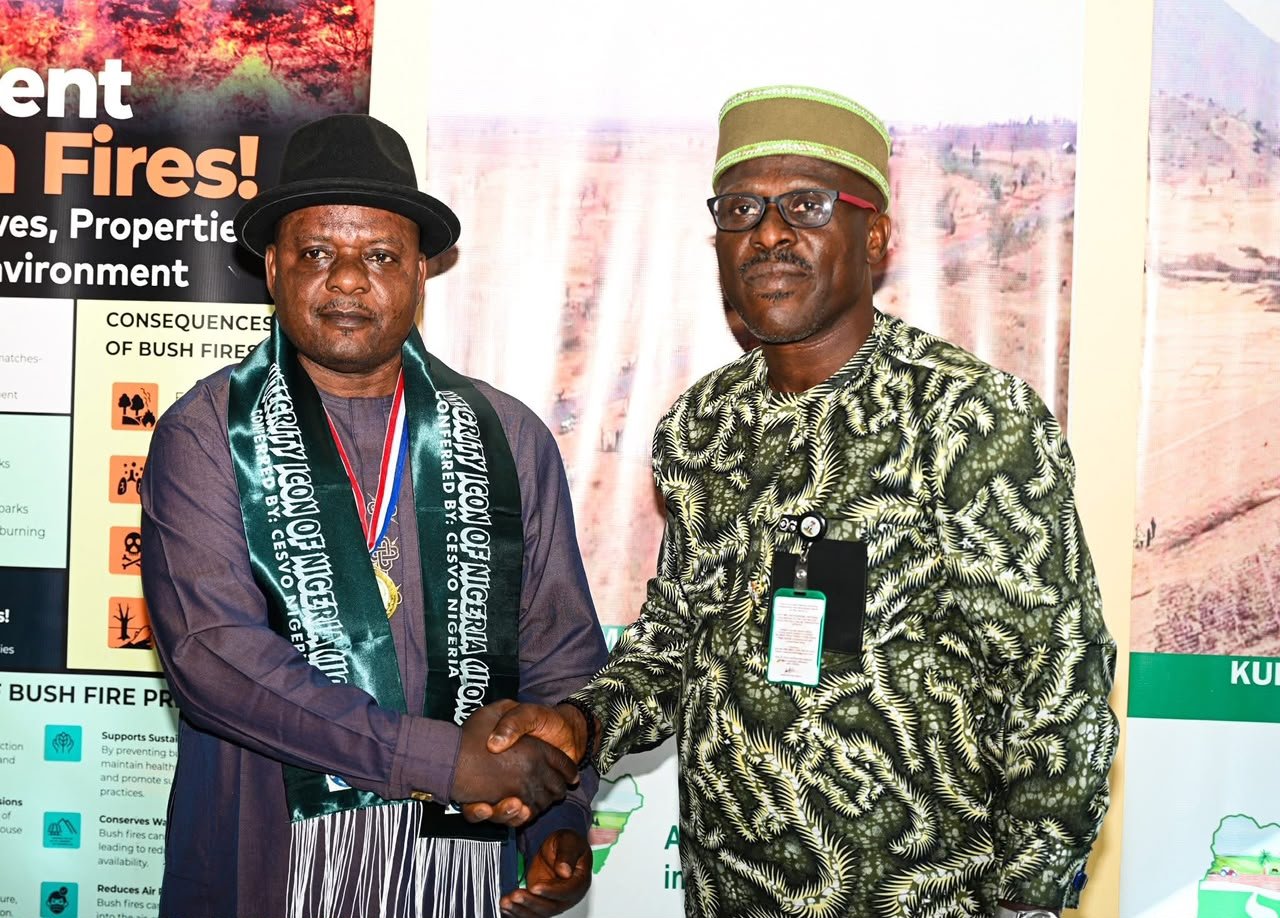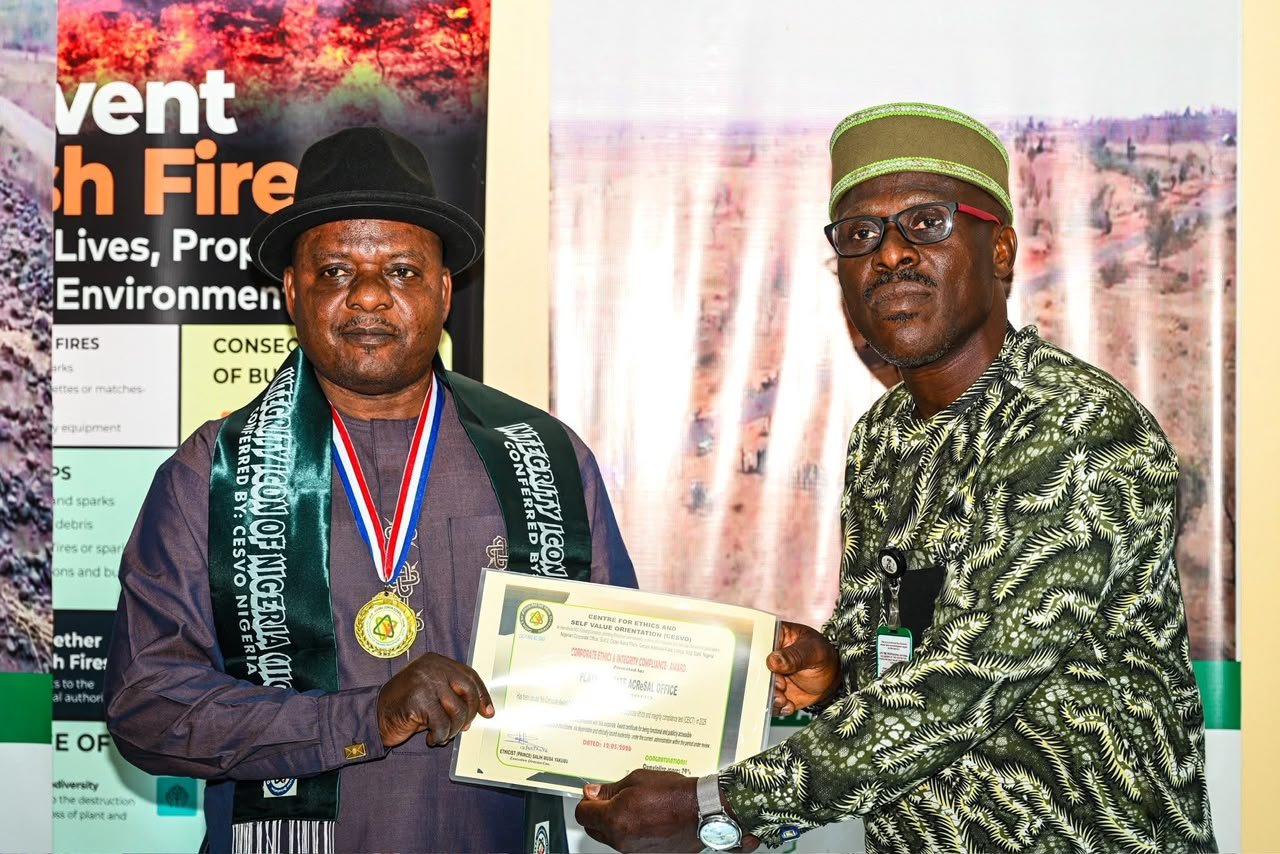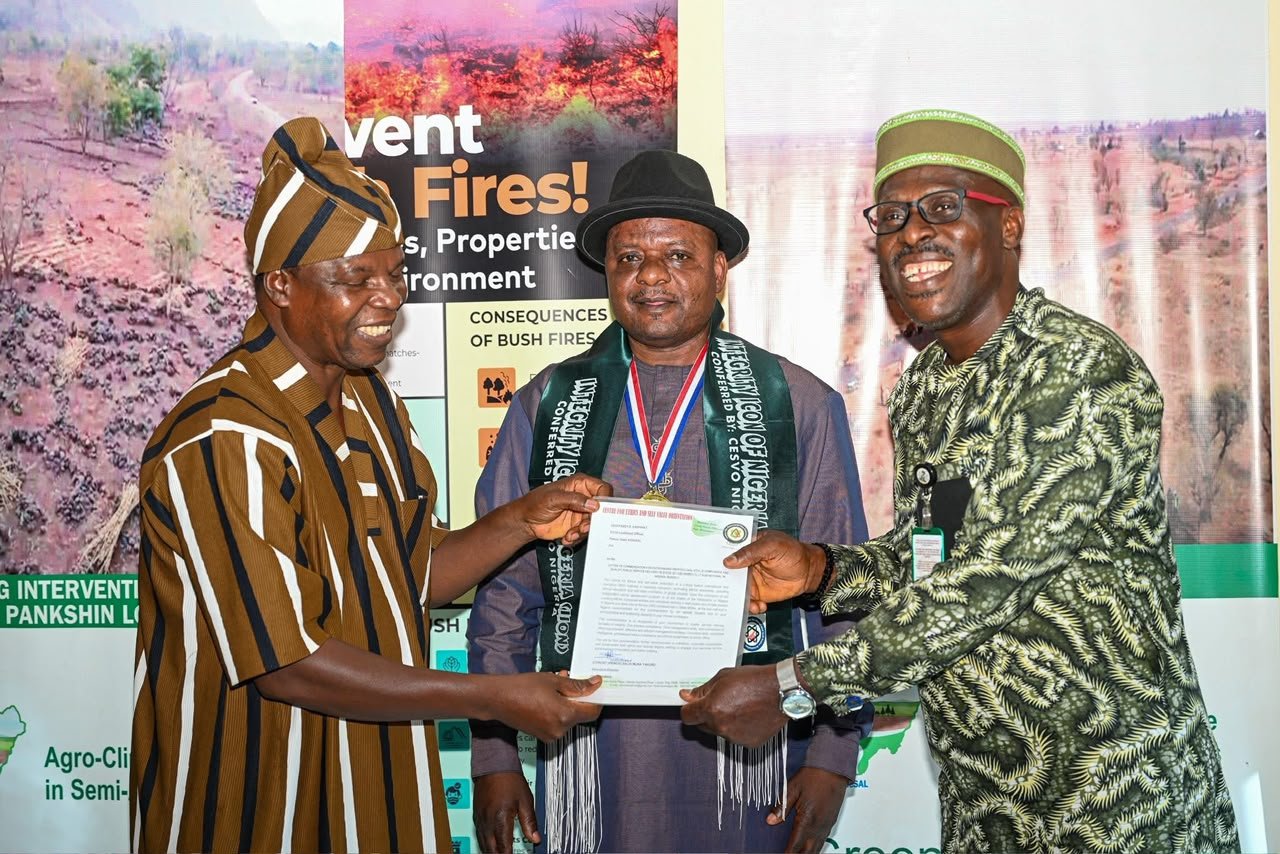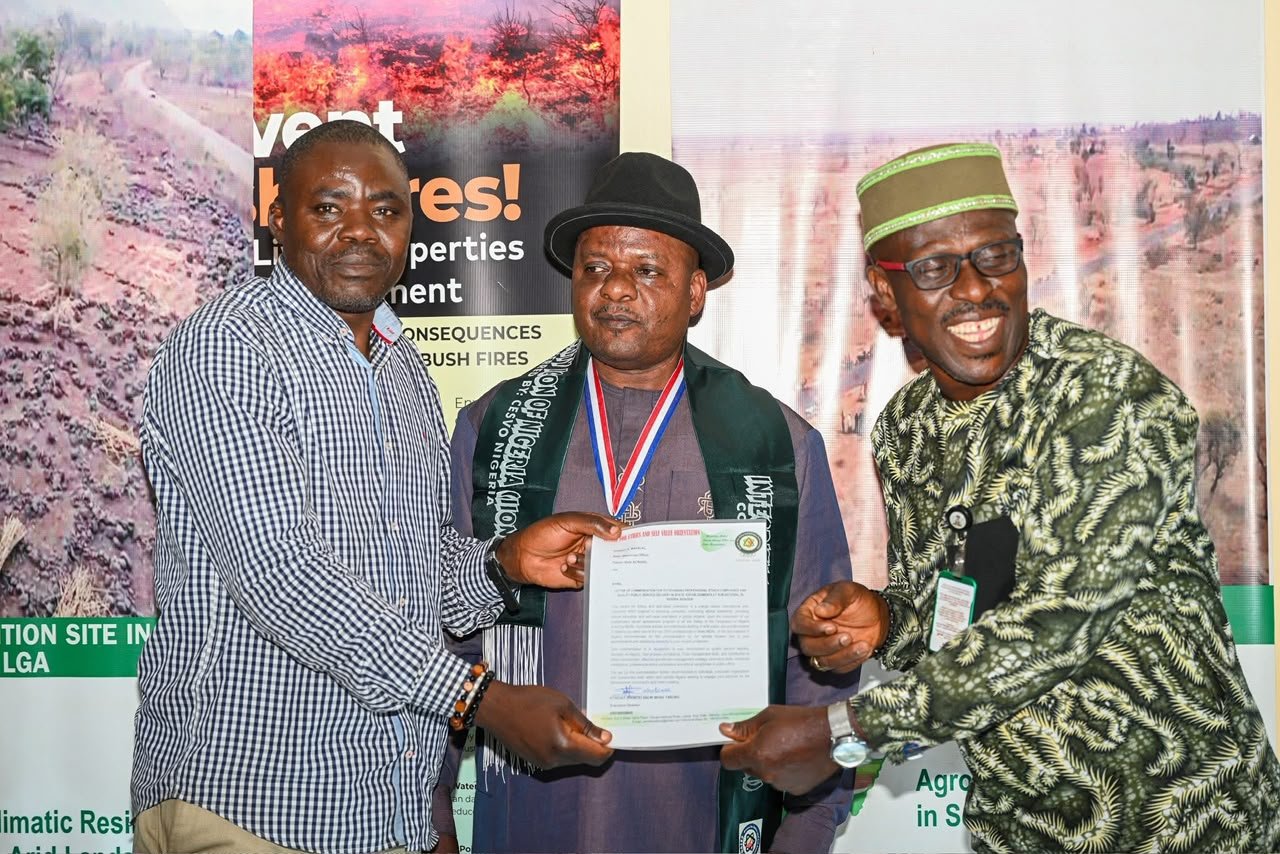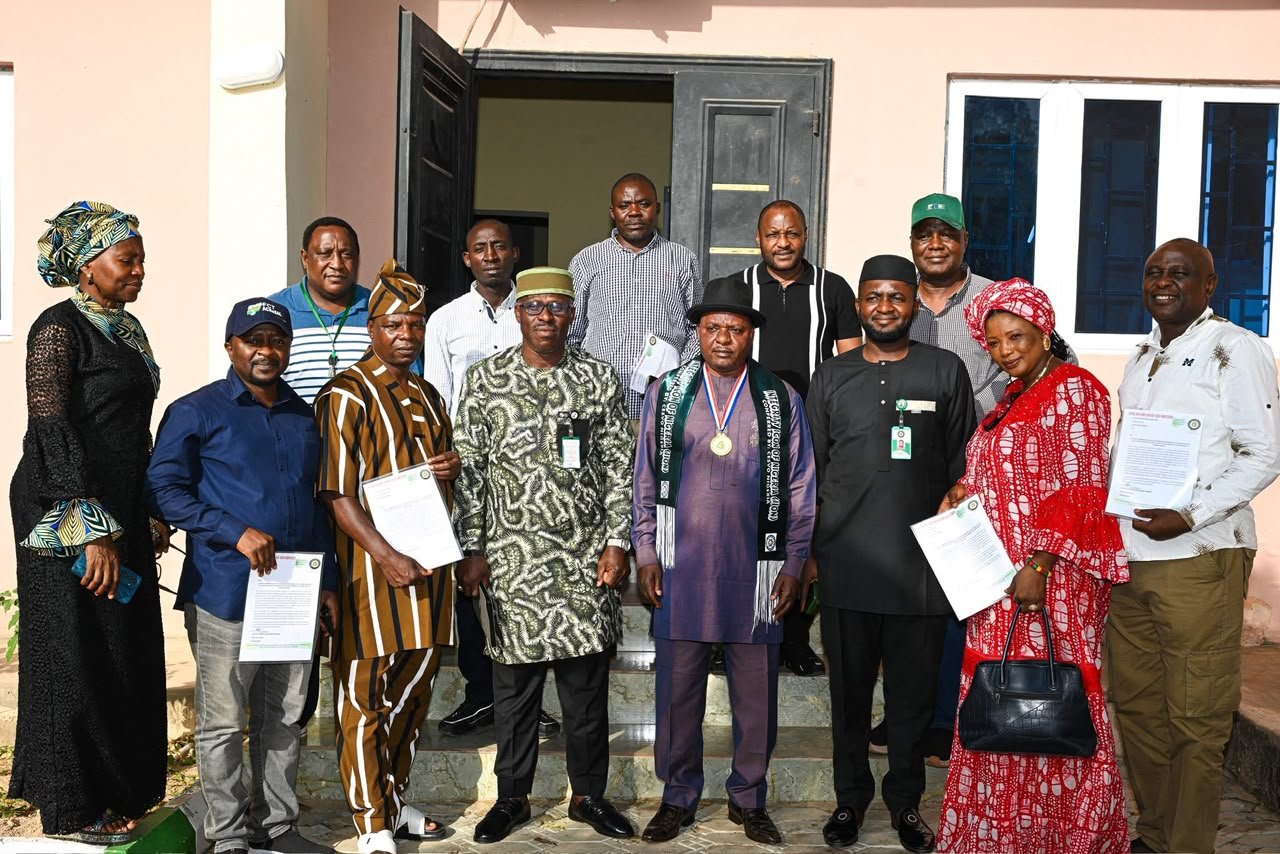

The Project Coordinator of the Agro‑Climatic Resilience in Semi‑Arid Landscapes (ACReSAL) Garba Gowon Gonkol was recently presented with a prestigious award recognizing exemplary public conduct and leadership integrity. The accolade places the coordinator among the top 100 most ethically upright and corrupt‑free professionals in state establishments, honoring sustained contributions to citizen wellbeing, national interest, effective monitoring and supervision, and advocacy against corruption in public administration.
The award was handed over at a ceremony hosted by the independent panel behind the Top 100 Public Integrity Awards, held at the conference hall of the ACReSAL project office in Jos recently.
The award citation by the Executive Director of the Centre for ethics and self value orientation Ethicist Prince Salih Musa Yakubu commended the coordinator’s “consistent demonstration of transparency, accountability and ethical leadership in the management of a high‑impact climate resilience programme,” noting measurable improvements in service delivery, stakeholder engagement and safeguards against misuse of public resources. ACReSAL, a multi‑sectoral program working to strengthen agricultural and water systems in semi‑arid landscapes, has in recent years focused on climate‑smart farming practices, water conservation, and community‑led monitoring that supports livelihoods while protecting fragile ecosystems.
In accepting the award, the ACReSAL Project Coordinator Garba Gowon Gonkol,said the recognition belonged to the entire team . “This honour reflects the dedication of our staff, the trust of the communities we serve, and the accountability systems we put in place to ensure every policy and project decision benefits citizens and protects public resources,” the coordinator said. “Integrity is not a one‑off achievement but a daily practice—through transparent procurement, inclusive decision‑making and open reporting we have built resilience that is both technical and ethical.”
The Executive Director of the awarding panel highlighted the role of public servants who uphold ethical standards in protecting the public interest. “In times when public trust is critical to effective governance and service delivery, individuals who model integrity and promote anti‑corruption practices set the standard for others,” the chair said. “This year’s cohort of awardees demonstrated rigorous adherence to transparent procedures, proactive supervision, and advocacy that has helped reduce risk and enhance outcomes for citizens.”
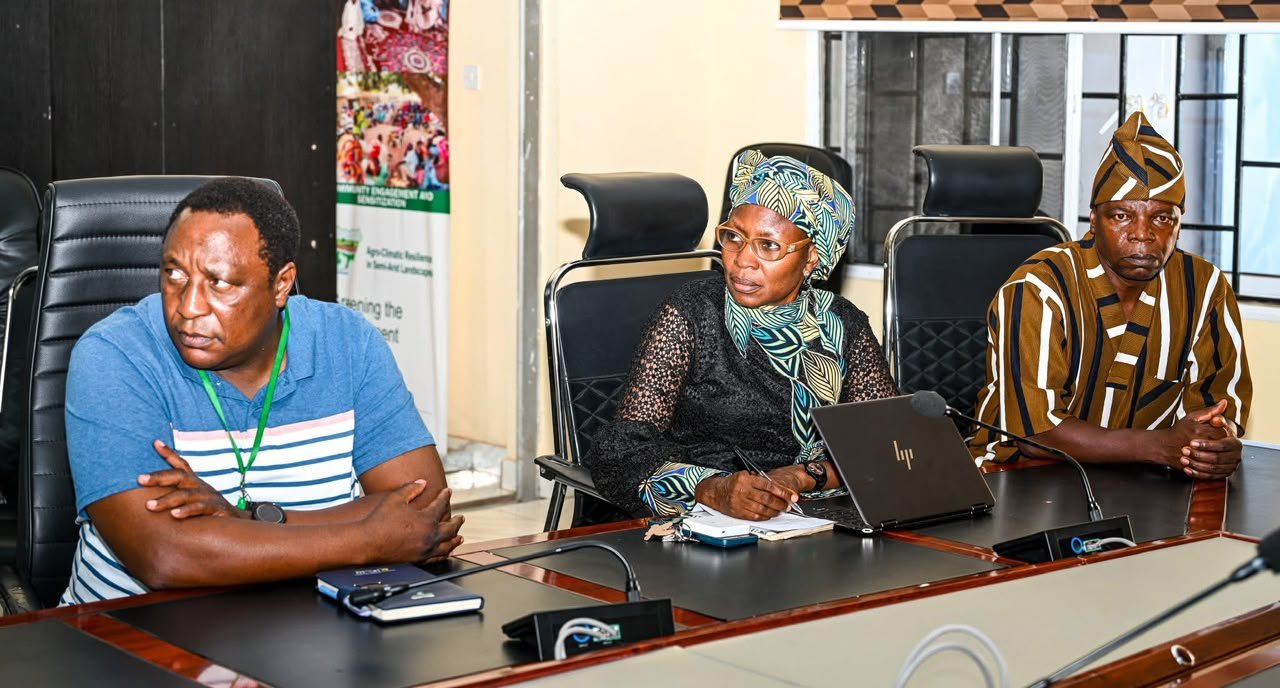
Staff at the event noted several features of the ACReSAL programme that likely influenced the ranking: community‑based monitoring committees, public disclosure of project budgets and procurement processes, independent audits with publicly available findings, and clear grievance and redress mechanisms that empower beneficiaries. Prince Salih Musa Yakubu also pointed to the project’s strong results framework, which ties climate resilience outcomes to measurable indicators and periodic independent verification.
The awarding body CESVO indicated that recipients were selected through a multi‑stage process combining public conduct and leadership integrity tests, peer nominations, documentary evidence of anti‑corruption and accountability practices, and independent verification. Winners were chosen for their demonstrated impact on citizens’ wellbeing, protection of national interest, and contributions to strengthening ethical public administration.
The ACReSAL Project Coordinator’s said the award will bolster ongoing efforts to scale up resilience interventions across the state and to deepen accountability mechanisms that guard against corruption. Project staff signaled that they will continue investing in capacity building for local oversight bodies, expanded stakeholder engagement, and transparent reporting to sustain both technical and ethical gains.
The award presentation is expected to draw further attention to the link between integrity in public office and the effectiveness of climate resilience and development programmes, reinforcing calls for routine monitoring, public disclosure, and community participation as central pillars of good governance.